Unpacking India’s New 2-Slab GST Regime: What Businesses Must Know

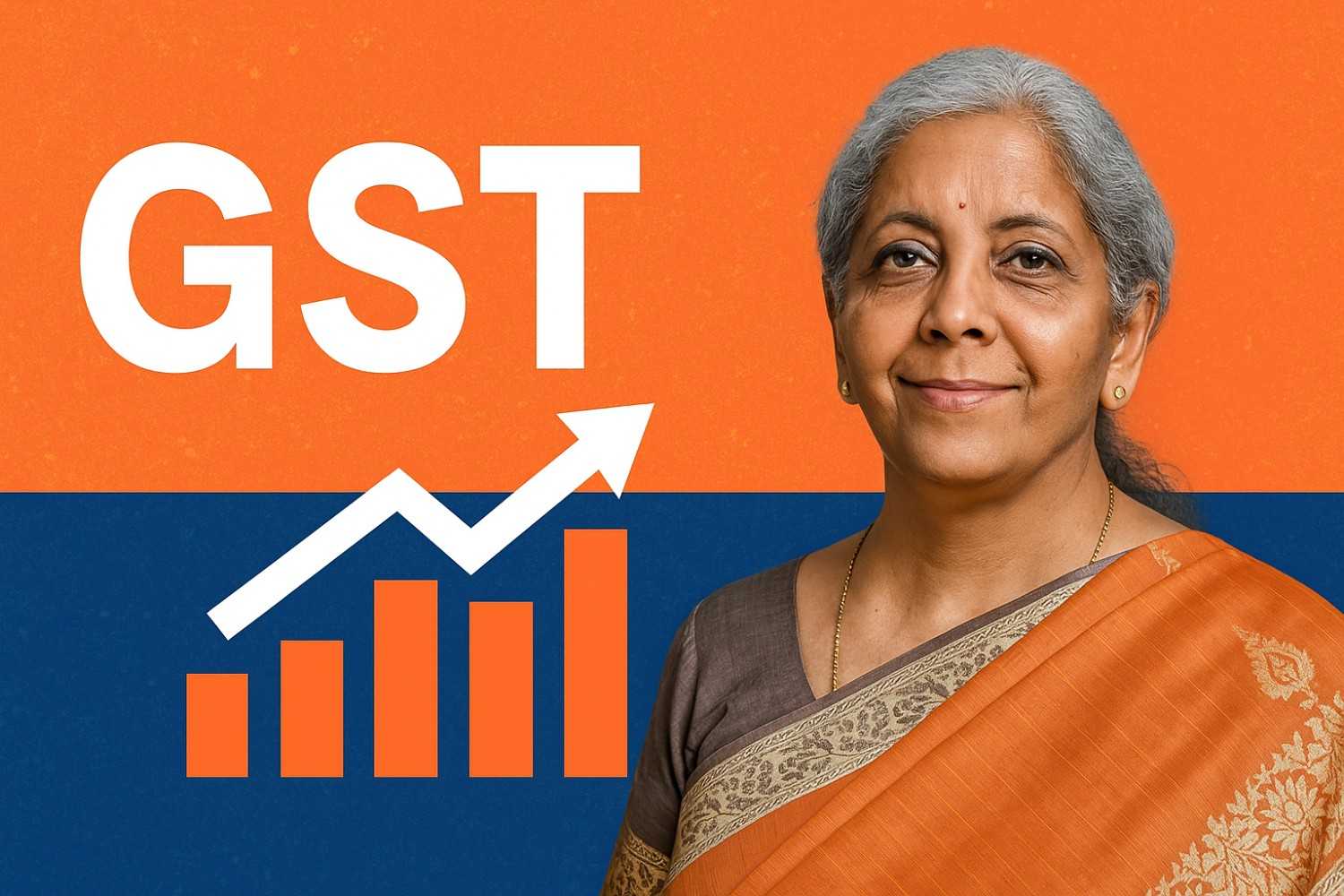
Explore India’s simplified two-slab GST structure—designed to ease compliance and boost business efficiency. Understand the new rates, benefits, challenges, and practical implications.
Unpacking India’s New 2-Slab GST Regime: What Businesses Must Know
India’s Goods and Services Tax (GST) has been one of the most significant economic reforms in recent decades, replacing a complex web of indirect taxes with a unified national system. However, the initial GST model had five major slabs (0%, 5%, 12%, 18%, and 28%), along with special cesses for certain goods.
While comprehensive, this multi-slab system became confusing for businesses and consumers alike. Different rates on similar products, frequent notifications, and high compliance costs led to calls for a simplified system.
In response, the government has announced a new two-slab GST structure—a reform aimed at making India’s indirect tax regime more transparent, predictable, and business-friendly.
1. Why the Shift to a Two-Slab GST System?
The decision stems from multiple factors:
-
Complexity of the old system: Businesses often struggled to classify goods correctly. For example, footwear priced below ₹1,000 attracted 5% GST, while those priced above ₹1,000 attracted 18%. Such distinctions led to confusion, disputes, and litigation.
-
Ease of compliance: MSMEs, startups, and small traders faced a disproportionate burden in filing returns and reconciling input tax credits across multiple slabs.
-
Consumer confidence: A simplified tax structure improves price transparency, which boosts consumption and reduces mistrust.
-
Global alignment: Most developed economies operate with one or two GST/VAT slabs, making India’s earlier model unusually complicated.
In short, fewer slabs mean fewer disputes, lower compliance costs, and improved trust in the tax regime.
2. What Are the Proposed Two Slabs?
Although exact rates may be fine-tuned, the broad framework looks like this:
-
Lower Slab (5%)
-
Covers essentials, mass consumption goods, and services considered necessary for daily life.
-
Example: Packaged food, basic household goods, affordable clothing, education services.
-
-
Higher Slab (18%)
-
Applied to discretionary, luxury, and non-essential items.
-
Example: Electronics, branded apparel, premium services, luxury goods.
-
This structure is expected to merge the existing 12% and 18% slabs into one middle rate while retaining a higher bracket for premium/luxury items.
3. How Does It Impact Different Stakeholders?
Consumers
-
Smoother pricing: Less confusion when comparing products.
-
Potential savings: Merging slabs may reduce effective tax rates on some goods.
-
Transparency: Easier to understand what you’re paying for.
Businesses
-
Reduced compliance: Fewer categories mean easier GST filing and accounting.
-
Revised pricing strategies: Companies will need to re-label, re-price, and adjust billing systems.
-
Cash flow benefits: Simplified input tax credit reconciliation reduces working capital blockages.
Government
-
Improved compliance rates: With fewer ambiguities, fewer disputes will arise.
-
Steady revenue streams: Broader slabs may expand the tax base while reducing evasion.
4. Key Challenges in the Transition
While promising, the transition won’t be entirely smooth:
-
Reclassification disputes: Some industries may lobby to keep products in the lower slab.
-
System upgrades: Businesses will need to update ERP, billing software, and e-invoicing systems.
-
Short-term confusion: During rollout, overlapping notifications may temporarily confuse taxpayers.
-
Inflationary risk: If the lower slab is set higher than the current 12%, essential goods may see price hikes.
5. Strategic Steps for Businesses
To prepare, companies should:
-
Conduct a GST audit of current product and service classifications.
-
Update pricing models to anticipate new slab assignments.
-
Reconfigure ERP and accounting software before the rollout.
-
Train staff and accountants in the updated GST processes.
-
Communicate transparently with customers about any price adjustments.
6. Sector-Wise Impact
-
Retail & FMCG: Likely to benefit from reduced ambiguity in pricing and broader tax harmonization.
-
Manufacturing: Input tax credits will be easier to reconcile, aiding cash flows.
-
Hospitality & Services: Services currently taxed at 18% may move into a merged mid-slab, possibly lowering costs.
-
Luxury & Automobile Industry: High-end products will remain in the higher slab, maintaining government revenue.
7. Long-Term Implications
The two-slab GST reform signals the government’s commitment to simplification and business-friendly policies. If successful, it could:
-
Reduce tax litigation dramatically.
-
Improve India’s ranking in Ease of Doing Business.
-
Encourage greater compliance and expand the tax base.
-
Attract foreign investors who prefer transparent tax regimes.
GST Slabs: Old vs New (Comparison Chart)
| Category | Old GST Slabs | New Two-Slab GST Policy (Proposed) | Impact |
|---|---|---|---|
| Essentials & Daily Goods | 0%, 5% | 5% (consolidated) | Slight increase on some goods, but simplified compliance |
| Standard Goods & Services | 12%, 18% | ~12–15% (merged mid-slab) | Many items see reduced rates, lowering consumer costs |
| Luxury & Premium Items | 28% + cess | 18% | Tax slightly reduced, but still kept higher for revenue |
| Special Categories | Exemptions (0%) for essentials like milk | Likely to remain exempt under GST reform | No major change |
Old Structure (5 Slabs):
-
0% (Exempt)
-
5% (Basic goods)
-
12% (Mid-range essentials)
-
18% (Standard goods/services)
-
28% (Luxury items, with cess on select goods like cars & tobacco)
New Structure (2 Slabs):
-
5% Slab: Covers essentials, daily-use goods, and services
-
18% Slab: Covers luxury, premium, and discretionary products
-
Exemptions on critical items remain unchanged
Key Takeaway:
Instead of businesses juggling five different slabs, they’ll now only need to classify under two simplified categories—drastically reducing compliance and disputes.